
Do You Capitalize Course Names
Do You Capitalize Course Names - Names of courses are capitalized (algebra 201, math 001). You only need to capitalize school subjects if you are referring to a specific title of a class such as “algebra 2.” in this case, you are referring to a proper noun as the class name. Proper nouns and formal names of departments and individuals are capitalized. Academic and nonacademic units and bodies. Capitalize the full name of a course, but if a course is referenced generically, it should not be capitalized. This post details the distinctions between these terms as proper nouns and as generic descriptions. Common nouns and informal forms of official names are not capitalized. The names of school subjects are typically common nouns. Abbreviations are acceptable for jan.,. School subjects that are the names of languages, such as english or german, are proper nouns and should be capitalized. Usage is divided with regard to capitalizing the name of a specific degree written in full. Capitalizing specific course titles refers to the convention of writing the names of academic courses with initial capital letters. This practice helps distinguish the titles from regular nouns. Abbreviations are acceptable for jan.,. Don’t capitalize general areas of study or the name of your major unless that area of study is the name of a language. Proper nouns and official names are capitalized. You only need to capitalize school subjects if you are referring to a specific title of a class such as “algebra 2.” in this case, you are referring to a proper noun as the class name. Use lowercase when you refer to classes and courses, unless you use the specific (and complete) title or the name carries a proper noun or numeral. Capitalize course titles such as history of the united states and elementary. When using the formal degree name, capitalize. When using the formal degree name, capitalize. Capitalize course titles such as history of the united states and elementary. The names of school subjects are typically common nouns. You only need to capitalize school subjects if you are referring to a specific title of a class such as “algebra 2.” in this case, you are referring to a proper noun. Names of courses are capitalized (algebra 201, math 001). This post details the distinctions between these terms as proper nouns and as generic descriptions. Academic and nonacademic units and bodies. Capitalize the full name of a course, but if a course is referenced generically, it should not be capitalized. You only need to capitalize school subjects if you are referring. When using the formal degree name, capitalize. Proper nouns and official names are capitalized. Capitalize the full name of a course, but if a course is referenced generically, it should not be capitalized. This post details the distinctions between these terms as proper nouns and as generic descriptions. I have flunked history 101, yet i. Common nouns and informal forms of official names are not capitalized. Capitalizing languages and courses with proper names means using uppercase letters for specific languages and the titles of academic courses, showing their importance and uniqueness. Don’t capitalize general areas of study or the name of your major unless that area of study is the name of a language. Proper. School subjects that are the names of languages, such as english or german, are proper nouns and should be capitalized. This post details the distinctions between these terms as proper nouns and as generic descriptions. Do not capitalize the name of a degree in informal references: The names of school subjects are typically common nouns. The convention for shortened course. Use lowercase when you refer to classes and courses, unless you use the specific (and complete) title or the name carries a proper noun or numeral. Do not capitalize the name of a degree in informal references: In text, academic degrees when used in a general sense are not capitalized. The convention for shortened course titles is to use the. Capitalizing languages and courses with proper names means using uppercase letters for specific languages and the titles of academic courses, showing their importance and uniqueness. Capitalize course names of all languages and all courses when the full name is used. Academic and nonacademic units and bodies. This practice helps distinguish the titles from regular nouns. Capitalize the full name of. Academic and nonacademic units and bodies. School subjects that are the names of languages, such as english or german, are proper nouns and should be capitalized. Do not capitalize the name of a degree in informal references: Proper nouns and formal names of departments and individuals are capitalized. The names of school subjects are typically common nouns. This post details the distinctions between these terms as proper nouns and as generic descriptions. Names of courses are capitalized (algebra 201, math 001). Don’t capitalize general areas of study or the name of your major unless that area of study is the name of a language. Common nouns and informal forms of official names are not capitalized. Capitalize course. Do not capitalize the name of a degree in informal references: This post details the distinctions between these terms as proper nouns and as generic descriptions. The names of school subjects are typically common nouns. Proper nouns and formal names of departments and individuals are capitalized. Don’t capitalize general areas of study or the name of your major unless that. Usage is divided with regard to capitalizing the name of a specific degree written in full. Don’t capitalize general areas of study or the name of your major unless that area of study is the name of a language. In text, academic degrees when used in a general sense are not capitalized. You should capitalize titles of people when used as part of their proper name. Professor smith but not “the professor” Capitalize course titles such as history of the united states and elementary. (that campus offers bachelor’s and. Capitalizing languages and courses with proper names means using uppercase letters for specific languages and the titles of academic courses, showing their importance and uniqueness. I have flunked history 101, yet i. Do not capitalize the name of a degree in informal references: Capitalize course names of all languages and all courses when the full name is used. You only need to capitalize school subjects if you are referring to a specific title of a class such as “algebra 2.” in this case, you are referring to a proper noun as the class name. Proper nouns and formal names of departments and individuals are capitalized. Capitalizing specific course titles refers to the convention of writing the names of academic courses with initial capital letters. This practice helps distinguish the titles from regular nouns. Abbreviations are acceptable for jan.,.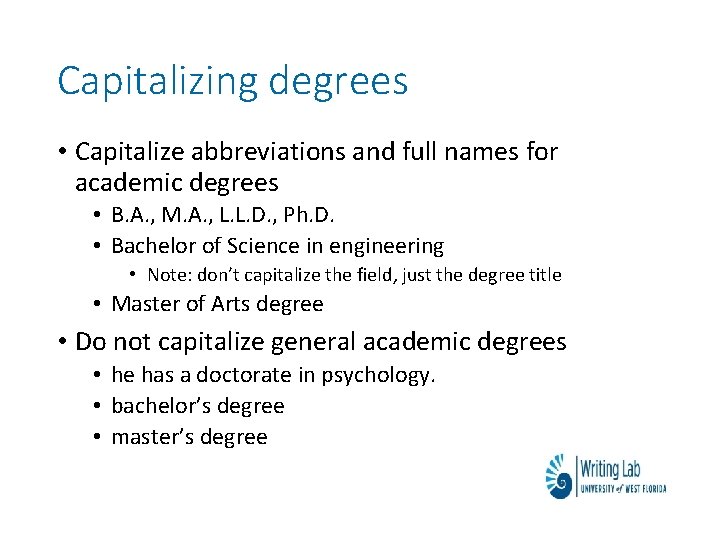
Do You Capitalize Degree Titles at Elba Romero blog
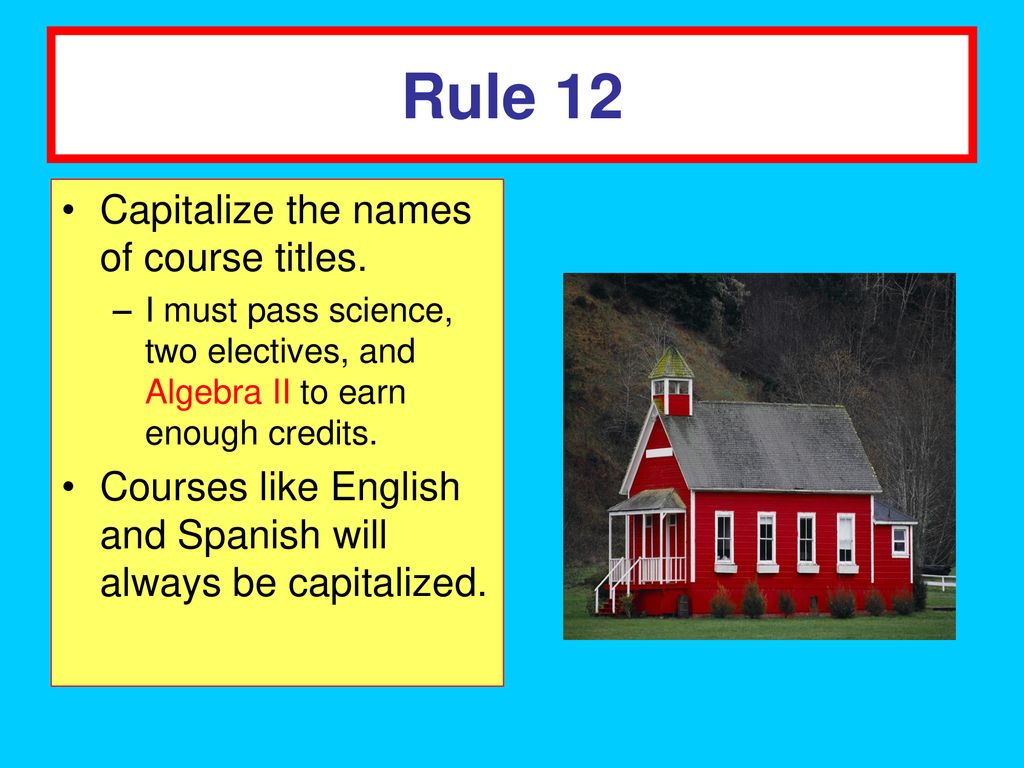
Capitalization Rules. ppt download
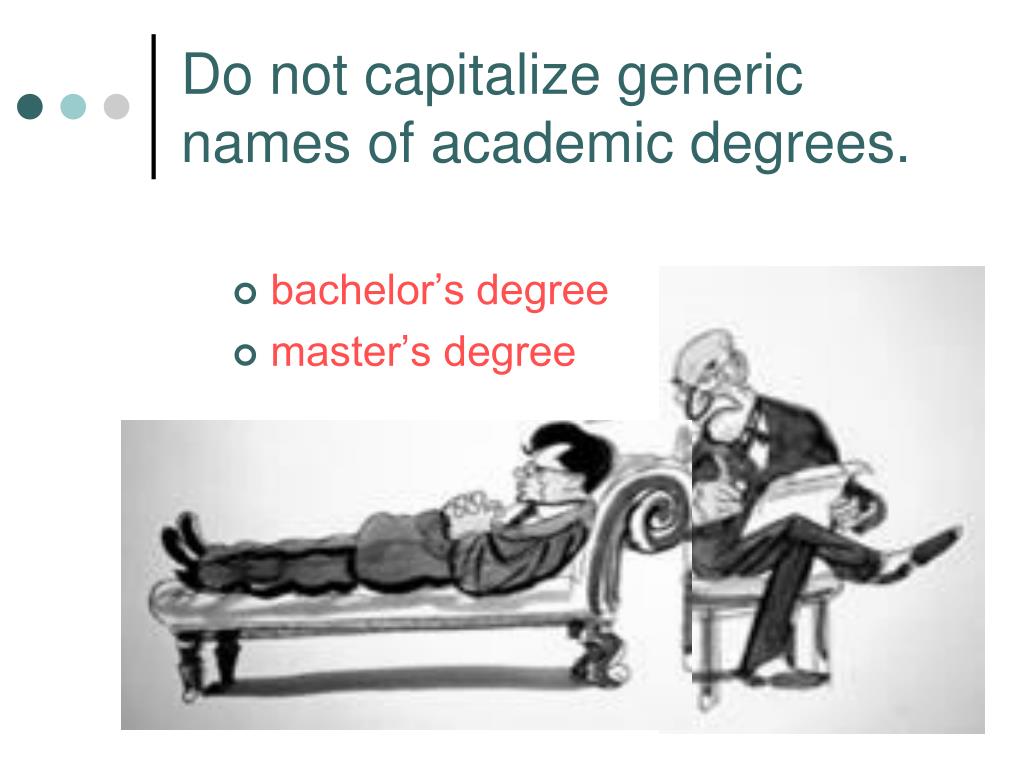
PPT Capitalization of Academic Classifications, Courses, and Degrees
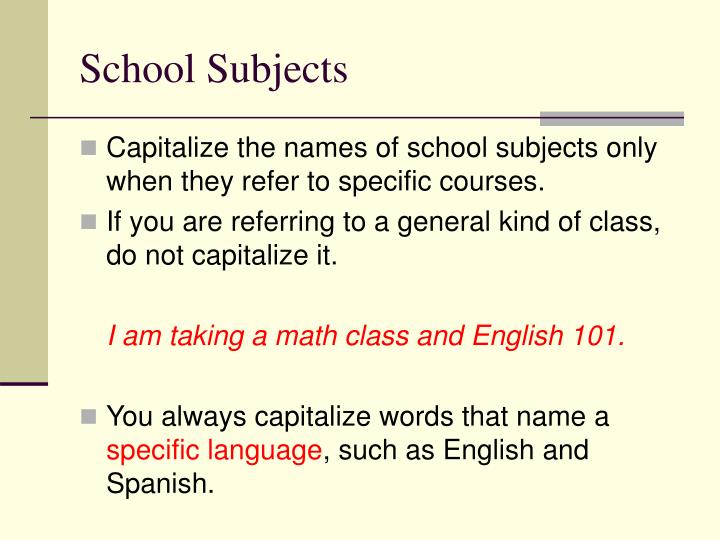
PPT Capitalization PowerPoint Presentation ID1287551

Capitalizing Subject Names YouTube
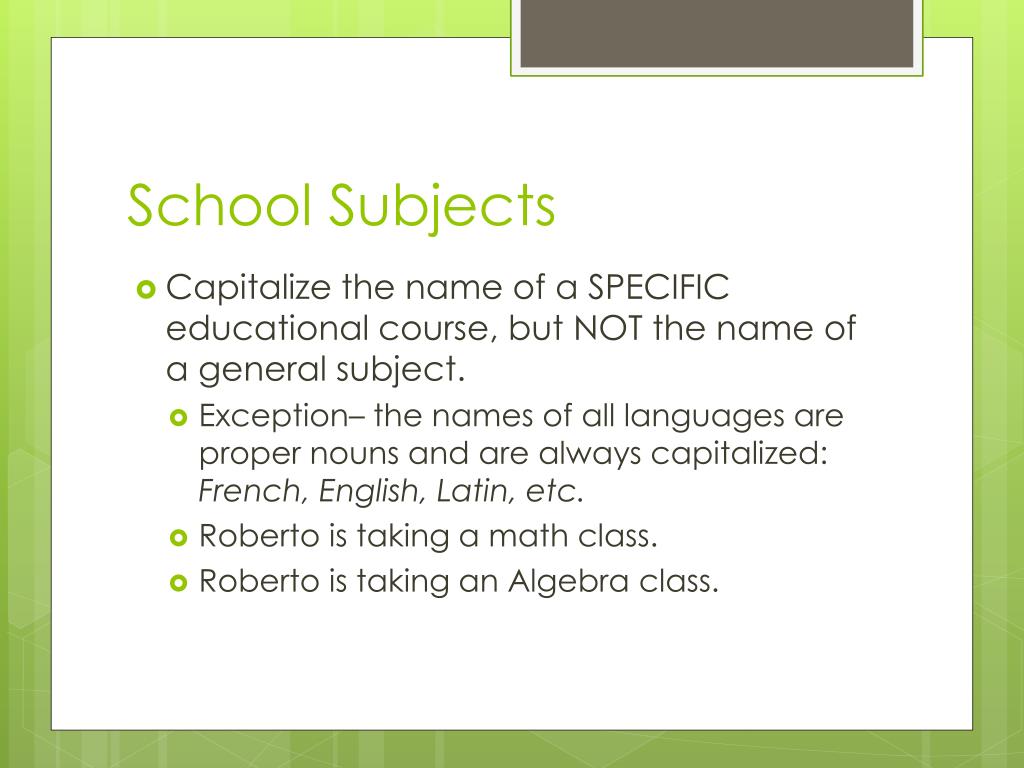
PPT Capitalization Rules & Guidelines PowerPoint Presentation ID
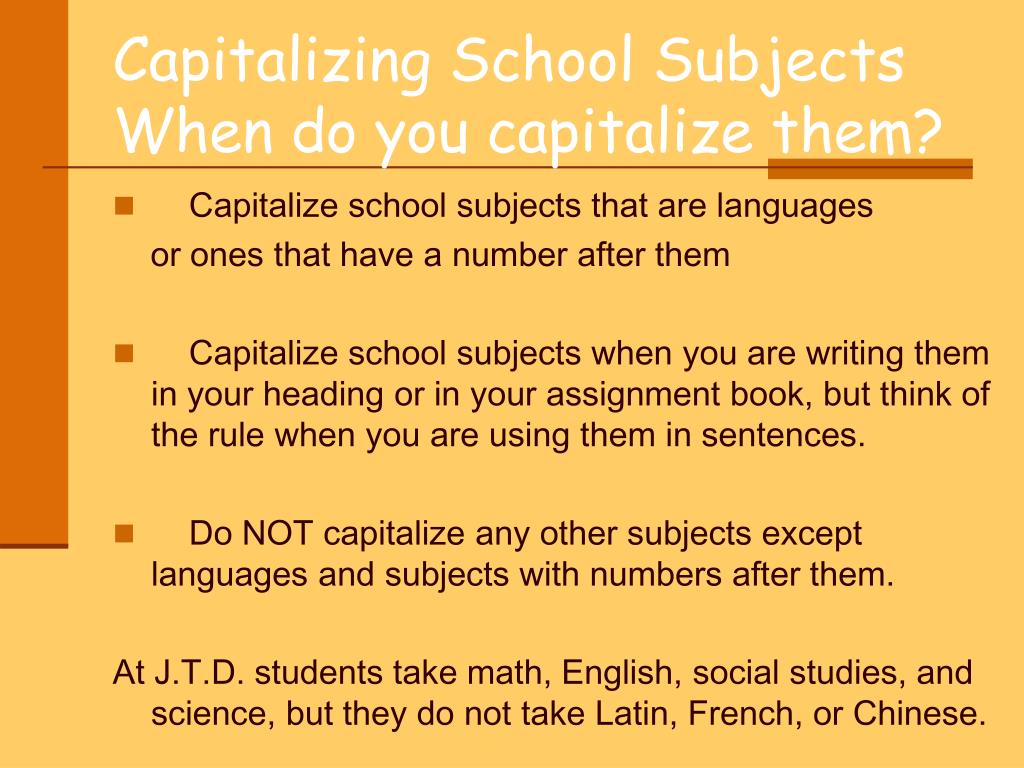
PPT Capitalization PowerPoint Presentation, free download ID3323725

Professor, Principal, Dean Are Faculty Titles Capitalized? Editor’s
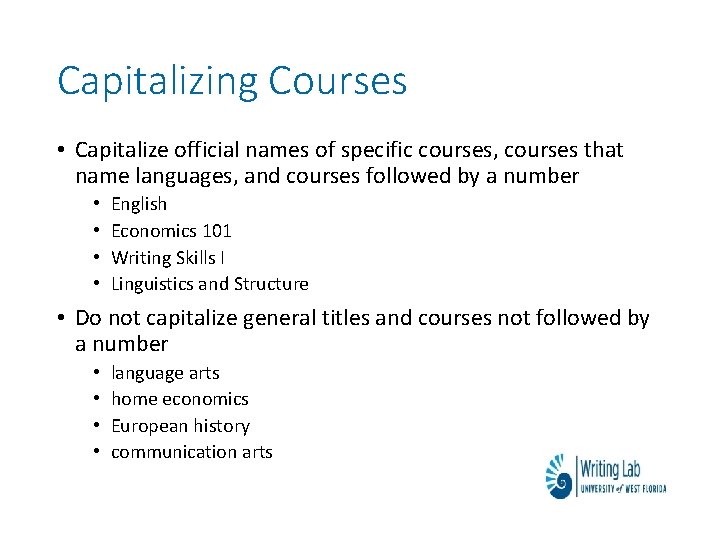
Writing Lab Capitalization Academic Classifications Capitalizing
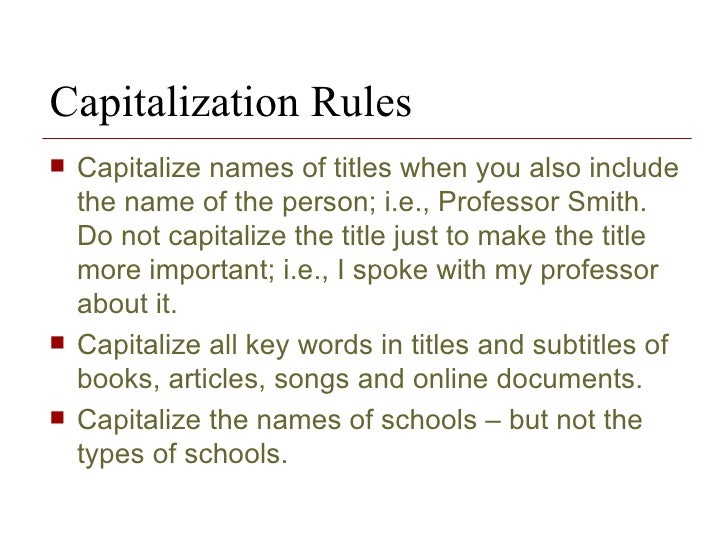
The Basics Punctuation, Capitalization, and Numbers in Academic Writ…
This Post Details The Distinctions Between These Terms As Proper Nouns And As Generic Descriptions.
Proper Nouns And Official Names Are Capitalized.
When Using The Formal Degree Name, Capitalize.
The Convention For Shortened Course Titles Is To Use The Abbreviated Department Code In Capital.
Related Post: